nav-left cat-right
cat-right

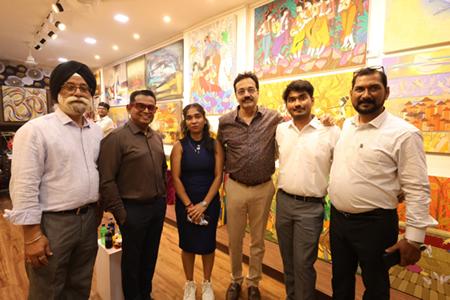
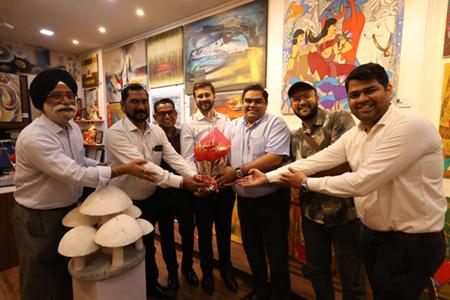
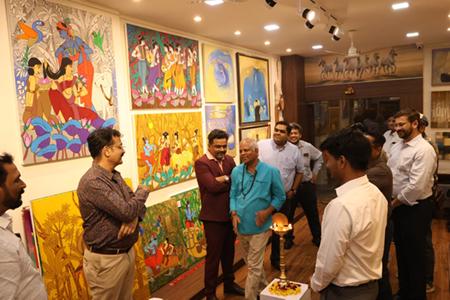
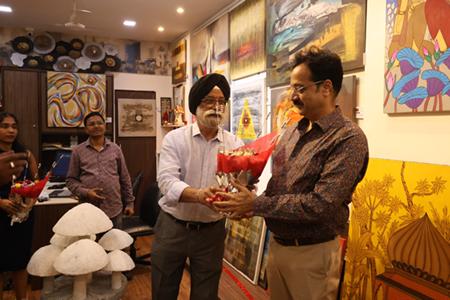
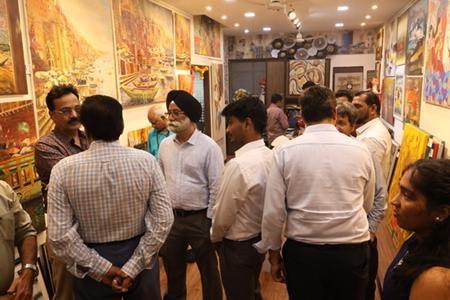
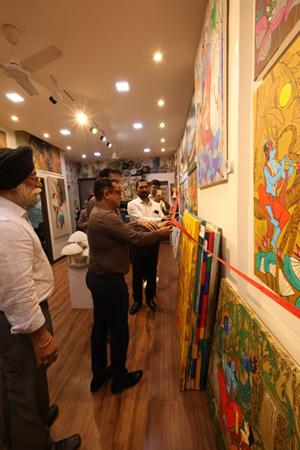
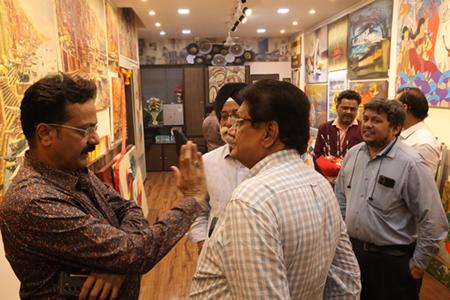
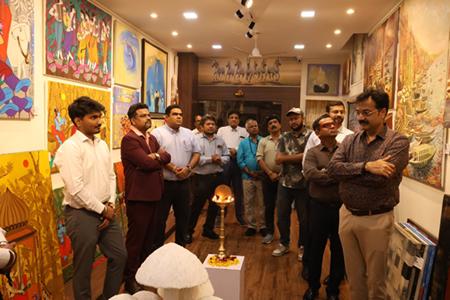
“Manthan” A Solo Exhibition By U.S.–Based Artist Anisha Sanghani, Opened At Kamalnayan Bajaj Art Gallery...

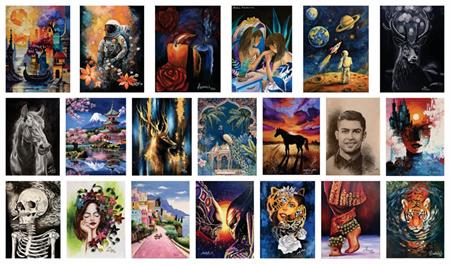
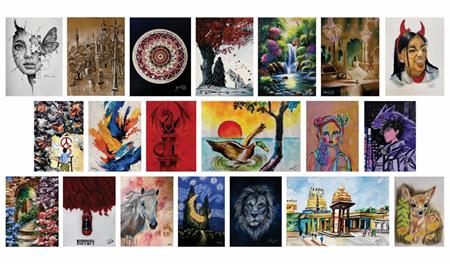
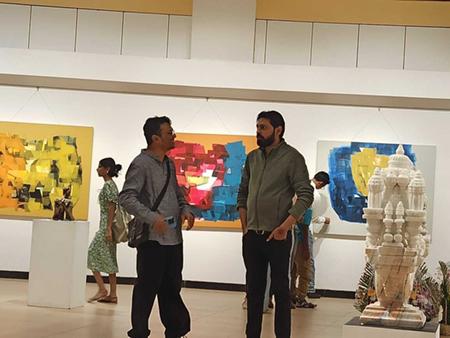
Anisha Sanghani’s first International solo show “Manthan” scheduled at Kamalnayan Bajaj Art Gallery, Nariman Point, Mumbai, December 1–6, 2025., embodies a Mythic Storm of Gods, Plastic, and Conscience. An ocean of kaleidoscopic colors unfurls, punctuated by a glimmer of gold. Gods ascend from the waves, and divinity appears revitalized. Nonetheless, upon closer examination, disillusion prevails. The resplendent display is not divine, but rather a searing commentary, as the gods’ smiles dissipate.

At Manthan, U.S. based Indian artist Anisha Sanghani rejects painting in favor of protest. Her mythic mixed-media exhibition, presents a world that has corrupted worship into waste. Drawing from the cosmic legend of Samudra Manthan, the churning of the ocean, Sanghani reimagines the myth in a world where the nectar has vanished, the ocean is slick with oil, and all that glitters is plastic. This is not Manthan. This is lamentation.

Maa Kali ascends, not with benedictions, but with blood and ire. Shiva grasps not the halahal, but mountains of discarded reverence. Vishnu floats not on cosmic waters but on rainbows of waste. Each canvas, each frame, trembles with sacred betrayal—crafted from acrylics, gold and silver foil, candy wrappers, metal, fabric, plastic, and even fishing net. These materials are not just medium. They are message.

But for Sanghani, this isn’t just an exhibition. It is resurrection. After two decades of work as a senior graphic product and package designer in U.S. the pandemic closed one door, and she opened another. Returning to art school, earning her BFA, reinventing herself as a full-time artist, muralist, and educator—this show is her soul on canvas. Her journey is one of reclamation. And each piece reflects that rebirth.

Manthan’s presence is announced with a wail, not a whisper. A sculpture visibly trembles, as if the Earth itself is experiencing a seismic event. The shimmer is mesmerizing, then unexpectedly piercing. A stark reminder that our oceans are facing destruction, our rituals are losing their essence, and our faith is being entangled in plastic. The exhibition serves as a call to action. Because when the gods rage, it is not thunder that we should fear. It is ourselves.

Manthan is a poignant and thought-provoking exploration of the intersection of oceanic wonders, ancient mythological themes, and the devastating impacts of consumerism, prompting introspective moments of recognition and reckoning. Sanghani’s canvases vividly capture the raw, suffocating terror of a world overwhelmed by its own waste, from plastic-entangled fish to gods in recoil. With a multidisciplinary background in fine arts, textiles, and graphic design, Sanghani reimagines the ancient myth of Samudra Manthan as a contemporary ecological cautionary tale, highlighting the dire consequences of human neglect. Her mixed-media works evoke a sense of both reverence and desecration, as seen in The New Manthan, where a sea turtle navigates through swirling waters as serpents and sea creatures maneuver through surreal mounds of plastic refuse, evoking a world where mythology reels under man-made disaster.

Sanghani’s artistic technique—lush, overflowing, almost seductive—draws viewers closer before confronting them with the brutality beneath. That brutality is not merely imagined. In a haunting set of personal experiments, Sanghani submerged herself in water with her face encased in plastic, attempting to inhabit the suffocating reality of marine creatures trapped in debris. “I became their voice,” she says. The image is devastating: a human being tasting the terror we force upon the ocean’s inhabitants daily. “Art cannot clean the oceans,” Sanghani notes, “but it can remind us of what they mean to us.” Manthan thus becomes a moral mirror.

Each piece elicits questions long buried beneath convenience and complacency. What are we taking from the ocean? What are we giving back? And what will surface next if we do not intervene? “I want to draw viewers in with beauty, only to expose the underlying unease,” she says. Manthan urges every visitor to face that discomfort, beginning their own inner churning toward awareness, responsibility, and renewal. Behold the new Manthan. Allow the radiance to enthrall you. Let the truth awaken your senses. For in this instance, the rainbow has fallen—and redemption is not assured. Nevertheless, there is still time.

Sanghani’s work is celebrated across the United States, India, and Puerto Rico, has won the Conceptual Artist of the Year Award from Art Comes Alive in Cincinnati, the Best Use of Theme Award from Reading Community Arts Center 2024, the Prestige Award from the University of Cincinnati, and the Garden Rotating Trophy from Sophia College, Mumbai. She has judged the Visual Arts Overture Awards for the Cincinnati Arts Association in 2024 and 2025. Her creations have been featured in the Cincinnati Enquirer, Atlanta Gazette, and more. But accolades aside, this show speaks louder than any trophy ever could.

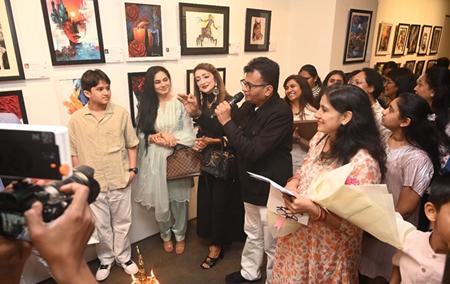
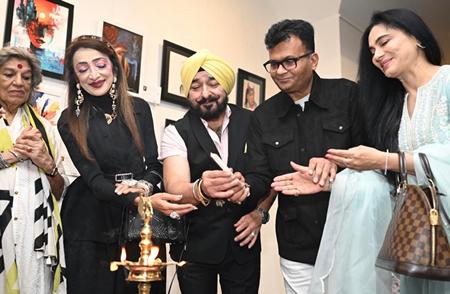
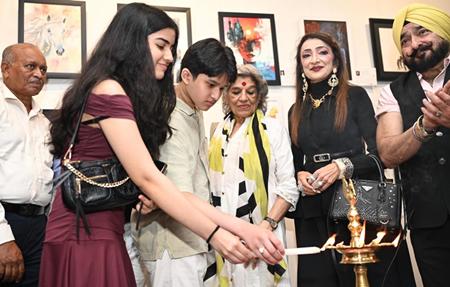
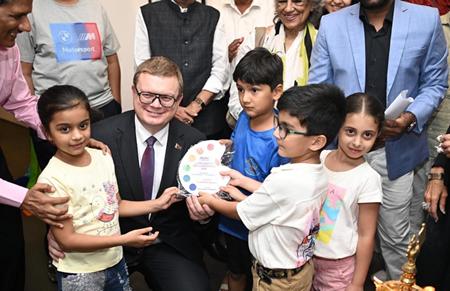
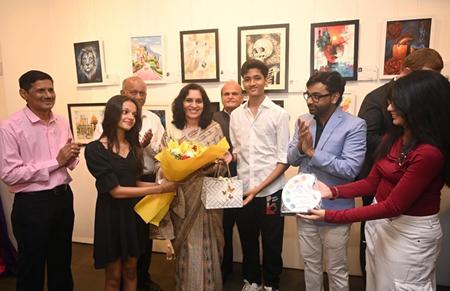
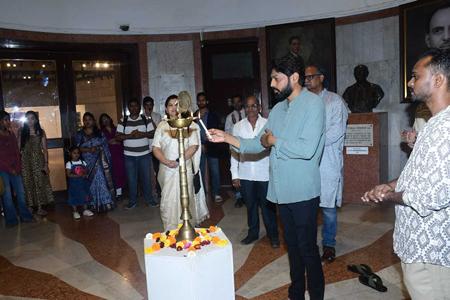
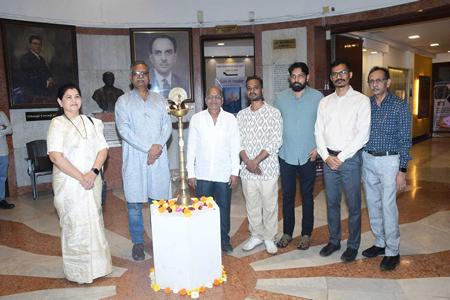
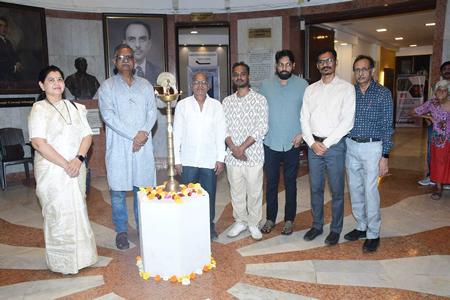
Manthan was inaugurated on 1 December 2025 by distinguished guests, including Ms. Nidhi Choudhary, IAS, Artist, and Director, National Gallery of Modern Art, Mr. Sameer Balvally, founder of the award-winning architecture and interior design practice Studio Osmosis, Mr. Ronak Sutaria, CEO, Respirer Living Sciences, Mr. Rishiraj Sethi, Director, Aura Art Development Pvt Ltd and co-founder of Aura Art, Dilip Ranade, distinguished Indian artist and former Senior Curator at Mumbai’s CSMVS, and Prakash Bal Joshi, renowned artist and author.

Also, special thanks to Bollywood film director, writer, and producer Harshavardhan Kulkarni, Sony Marketing Strategist Parinda Singh, and Bollywood Music Director Khamosh Shah for attending the inauguration and for their appreciation for my works.

Photographers: Ajay Natke and Sharon Dev Pimento.


“Manthan” A Solo Exhibition By U.S.–Based Artist Anisha Sanghani, Opened At Kamalnayan Bajaj Art Gallery

“UJJAL” An Exhibition Of Paintings & Sculpture By 6 Renowned Artists In Jehangar Art Gallery...
From: 14th to 20th October 2025

“UJJAL”

An Exhibition of Paintings & sculptures by 6 contemporary renowned artists – Bappa Maji, Pravat Manna, Subrata Paul, Sudeshna Sil, Sudip Biswas, Tanmoy Hazra.

VENUE:

Jehangir Art Gallery

Auditorium Hall

161-B, M.G. Road

Kala Ghoda, Mumbai 400001

Timing: 11am to 7pm

Contact: +91 9163718889, +91 9831307228

UJJAL” — A Radiant Confluence of Painting & Sculpture
14 – 20 October 2025 | Jehangir Art Gallery (Auditorium Hall), Mumbai

The group show “UJJAL” displays paintings and sculptures by six contemporary Indian artists: Bappa Maji, Pravat Manna, Subrata Paul, Sudeshna Sil, Sudip Biswas, and Tanmoy Hazra.

“UJJAL” (meaning bright, luminous) draws viewers into a deep conversation with form, colour, memory, myth, and nature. These six artists, regardless of their fields, combine tradition and novelty, the physical and the lyrical, the individual and the general.

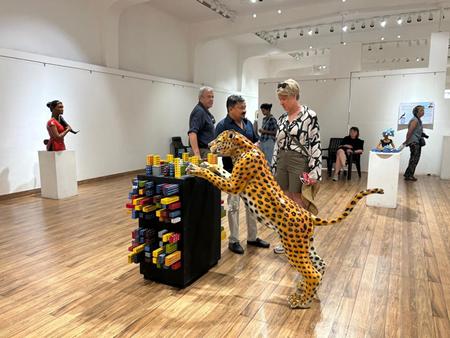
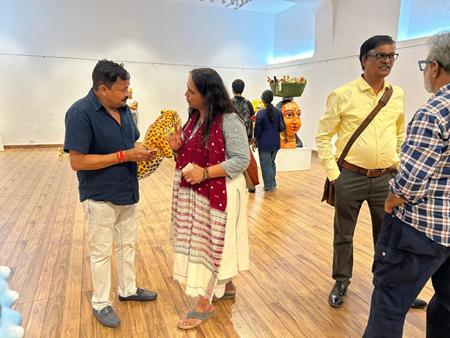
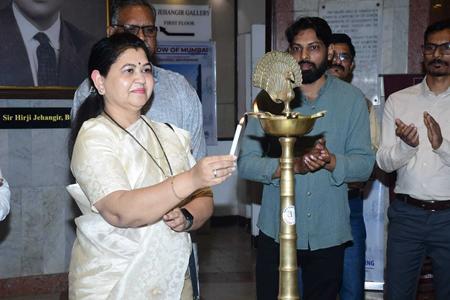
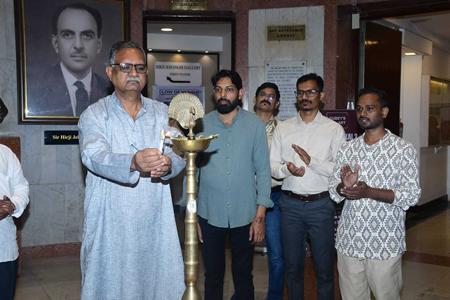
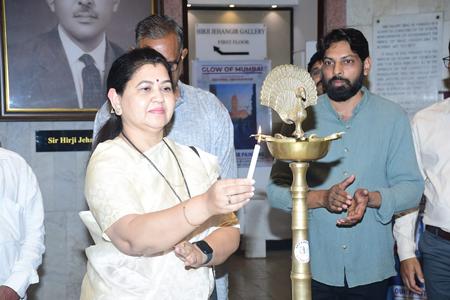
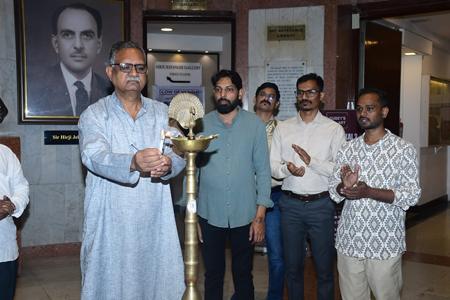
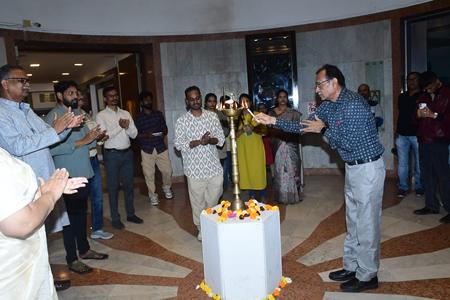
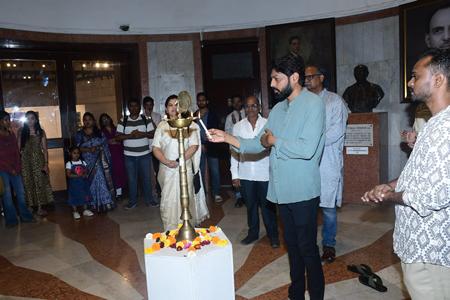
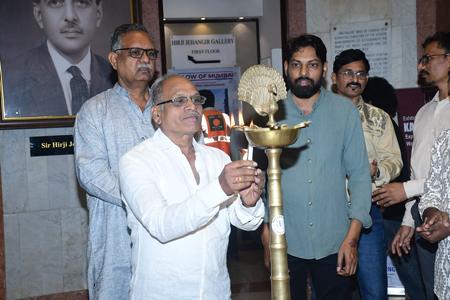
This show was inaugurated on 14th October 2025 by Mr. Brahmanand S. Singh(National Award Winning Filmmaker, Author & Mentor)

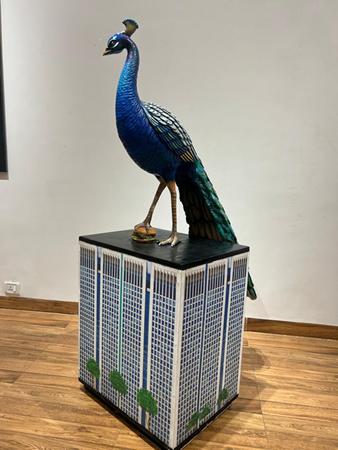
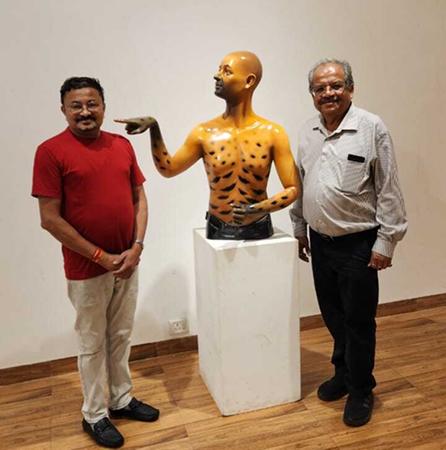
Bappa Maji of Kolkata sculpts sacred and animal forms using the Bengal Dokra tradition. He reinterprets mythological Vahanas in new materials. His art considers humans, animals, myth, and daily life, prompting viewers to feel respect and think.

Pravat Manna uses paint to change the canvas into a landscape of feelings, using oil, acrylic, and mixed media. Through layered compositions, he explores memory, identity, and humanity, using technical skill and personal symbolism.

Active since the late 1990s, Subrata Paul sculpts, often with bronze and wood, moving beyond mere replication to reveal the hidden energies of form. His sculptures communicate human feelings and interactions, using both old and new artistic methods.

Sudeshna Sil’s work reflects her sensitivity, influenced by Bengal’s nature and art training. Through watercolour, mixed media, and fabric, she portrays nature’s depth, offering escape from city life.

Sudip Biswas, a notable modern Indian painter, creates stories of quiet feelings, cultural remembrance, and tradition. Benaras and the Ganga influence his paintings, which combine abstraction and figuration. His recent awards highlight the impact of his work.

The exhibition also includes Tanmoy Hazra’s work, which is characterised by its expressive and innovative qualities and engagement with diverse materials, form, context, and meaning.

The six artists engage in a complex dialogue, rich with layers of myth and matter.

“UJJAL” presents a unique mix of artists, allowing art lovers to dive into modern Indian visuals that are both classic and forward-looking. We welcome everyone to experience these artworks at Jehangir Art Gallery.

Sushma Sabnis – Mumbai.

“UJJAL” An Exhibition of Paintings & Sculpture by 6 renowned artists in Jehangar Art Gallery

“Visthapan” Solo Show Of Recent Work By Vishwa Sahni In Jehangir Art Gallery...

From: 14th to 20th October 2025

“Visthapan”

A Solo Show of Recent Work by Vishwa Sahni

VENUE:

Jehangir Art Gallery

161-B, M.G. Road

Kala Ghoda, Mumbai 400001

Timing: 11am to 7pm

Contact: +91 9324647023

“Visthapan” Solo Show of Recent Work by Vishwa Sahni in Jehangir Art Gallery, Kala Ghoda, Mumbai from 14th to 20th October 2025

This show was inaugurated on 14th October 2025 by Ms. Manju Ramesh Chouhan(Staff member of Jehangir Art Gallery) in the presence of Mr. Padmanabh Bendre(Eminent Artist), Pradeep Chandra(Eminent Photographer & Author), Mr. Uttam Jain(Patron Hindustan Chamber of Commerce), Mr. Snehal N. Muzoomdar(President, Indian Musicological Society), Mr. K.K. Tated(Chairman, committee to monitor Animal Welfare) among others.

Vishwa Sahni’s painting seems to have been focused for some time on the contention that abstraction, if allowed to breathe in a deeper pictorial space, can maintain visual opulence without drifting too far from its essentially two-dimensional syntax. Among a generation of artists who matured on this side of painting’s pluralist expansion, where each painter’s style, look and touch was far more varied than that of their predecessors, Sahni held to a firm figurative scaffold based on migration both perceived and imagined. Though the iconography in this recent work remains readable each painting’s horizon is still easy to find, there is in newer panels a softening of the edges and a swelling of forms that now shimmer behind translucent washes instead of bending, as they once did, into each other’s space. From an optimal distance coerced from the viewer by the five feet by nine feet spread of their frames their reconfigured cohesion seems to rely less on drawing and more on a spontaneous manipulation of hue and texture.

The resulting airiness is a clear departure from his earlier work, which is reprised in this exhibition, an example of his harder-edged shapes, apparently reconstituted during the painting’s many stages of development so as not to diminish the careful coordinating of its unique structural invention. To drift from the success of this method is risky, for what’s been so appealing about Sahni’s work until now has been precisely its interconnected complexity. The changes seen in this exhibition may be attributed in some measure to his establishing a studio in Mumbai, a move from country life in Madanpur, for reasons linked to the landscape itself, resetting a painter’s perspective.

A clue to the path taken in this shift between the earlier compositions and these newer, cloudier apparitions may be found in seven-foot square painting representing the artist’s trials at keeping the structure fixed tighter to the surface. Here, a familiarity with Sahni’s elevated horizon line helps the viewer read the ghost of a landscape that still exists despite the missing diagonals and story-book trees of his earlier work, elements that had once supported the artist’s penchant for excavating spatial illusion with little cost to a lively surface. Visthapan marks the change as its simplified shapes are not immediately recognizable as landscape elements. They also seem unusually tolerant of each other’s position in the composition.

And yet to my eye the most adventurous of the newer canvases in the show, still owes something to the lexicon of the earlier work, though here it seems Sahni’s method has turned to a new and pronounced improvisation. Visthapan’s surface remains in a perturbed state. Edges are ragged and makeshift. Translucency dominates. There is even a gestural coarseness replacing what was once a controlled chaos of endlessly suggestive shapes. The color alone in Visthapan provides the link to earlier work, being mostly middle tones of contingent primary and secondary hues.

For anyone who has followed Sahni’s work these many years, an effort to catch up to where he is now will require diligence, which I believe is a fair expectation for him to make as his paintings have always appealed to a visually smart audience. Because his abundant inventiveness had constituted as near a legible pictorial language as created by any painter in recent memory, encountering its contraction will demand a real and unavoidable learning curve. Sahni is a painter whose strength had always been his ability to develop variations on a theme. The construction of an intelligent, readable and teasingly ambiguous pictorial image, still speaks to a continuity of vision.

Sahni has never been a painter fixated on concocting a new look, and there is no indication here of chasing novelty, nor is there any hint of applying arbitrary effects to avoid comparison with contemporaries. From the beginning his work has been a conscious adaptation of migrant landscape elements knit tightly into compositions that owed a great deal of their cohesion to those compositional properties that as any instructor knows are maddeningly difficult to formulate verbally but can be appreciated in its many variations. As galleries continue to hawk brightly colored things apparently meant for the simpler aim of accessorizing the expansive blank walls that once provided inexpensive working space for artists, it gives one hope to watch a painter keep to self-imposed limitations, not in spite of, but because there is more than enough room within a rectangle of canvas to address a thoughtful and historically aware sensibility.

—Abhijeet Gondkar

October 2025, Mumbai


“Visthapan” Solo Show Of Recent Work By Vishwa Sahni In Jehangir Art Gallery

“Visthapan” Solo Show Of Recent Work By Vishwa Sahni In Jehangir Art Gallery...

From: 14th to 20th October 2025

“Visthapan”

A Solo Show of Recent Work by Vishwa Sahni

VENUE:

Jehangir Art Gallery

161-B, M.G. Road

Kala Ghoda, Mumbai 400001

Timing: 11am to 7pm

Contact: +91 9324647023

“Visthapan” Solo Show of Recent Work by Vishwa Sahni in Jehangir Art Gallery, Kala Ghoda, Mumbai from 14th to 20th October 2025

This show was inaugurated on 14th October 2025 by Ms. Manju Ramesh Chouhan(Staff member of Jehangir Art Gallery) in the presence of Mr. Padmanabh Bendre(Eminent Artist), Pradeep Chandra(Eminent Photographer & Author), Mr. Uttam Jain(Patron Hindustan Chamber of Commerce), Mr. Snehal N. Muzoomdar(President, Indian Musicological Society), Mr. K.K. Tated(Chairman, committee to monitor Animal Welfare) among others.

Vishwa Sahni’s painting seems to have been focused for some time on the contention that abstraction, if allowed to breathe in a deeper pictorial space, can maintain visual opulence without drifting too far from its essentially two-dimensional syntax. Among a generation of artists who matured on this side of painting’s pluralist expansion, where each painter’s style, look and touch was far more varied than that of their predecessors, Sahni held to a firm figurative scaffold based on migration both perceived and imagined. Though the iconography in this recent work remains readable each painting’s horizon is still easy to find, there is in newer panels a softening of the edges and a swelling of forms that now shimmer behind translucent washes instead of bending, as they once did, into each other’s space. From an optimal distance coerced from the viewer by the five feet by nine feet spread of their frames their reconfigured cohesion seems to rely less on drawing and more on a spontaneous manipulation of hue and texture.

The resulting airiness is a clear departure from his earlier work, which is reprised in this exhibition, an example of his harder-edged shapes, apparently reconstituted during the painting’s many stages of development so as not to diminish the careful coordinating of its unique structural invention. To drift from the success of this method is risky, for what’s been so appealing about Sahni’s work until now has been precisely its interconnected complexity. The changes seen in this exhibition may be attributed in some measure to his establishing a studio in Mumbai, a move from country life in Madanpur, for reasons linked to the landscape itself, resetting a painter’s perspective.

A clue to the path taken in this shift between the earlier compositions and these newer, cloudier apparitions may be found in seven-foot square painting representing the artist’s trials at keeping the structure fixed tighter to the surface. Here, a familiarity with Sahni’s elevated horizon line helps the viewer read the ghost of a landscape that still exists despite the missing diagonals and story-book trees of his earlier work, elements that had once supported the artist’s penchant for excavating spatial illusion with little cost to a lively surface. Visthapan marks the change as its simplified shapes are not immediately recognizable as landscape elements. They also seem unusually tolerant of each other’s position in the composition.

And yet to my eye the most adventurous of the newer canvases in the show, still owes something to the lexicon of the earlier work, though here it seems Sahni’s method has turned to a new and pronounced improvisation. Visthapan’s surface remains in a perturbed state. Edges are ragged and makeshift. Translucency dominates. There is even a gestural coarseness replacing what was once a controlled chaos of endlessly suggestive shapes. The color alone in Visthapan provides the link to earlier work, being mostly middle tones of contingent primary and secondary hues.

For anyone who has followed Sahni’s work these many years, an effort to catch up to where he is now will require diligence, which I believe is a fair expectation for him to make as his paintings have always appealed to a visually smart audience. Because his abundant inventiveness had constituted as near a legible pictorial language as created by any painter in recent memory, encountering its contraction will demand a real and unavoidable learning curve. Sahni is a painter whose strength had always been his ability to develop variations on a theme. The construction of an intelligent, readable and teasingly ambiguous pictorial image, still speaks to a continuity of vision.

Sahni has never been a painter fixated on concocting a new look, and there is no indication here of chasing novelty, nor is there any hint of applying arbitrary effects to avoid comparison with contemporaries. From the beginning his work has been a conscious adaptation of migrant landscape elements knit tightly into compositions that owed a great deal of their cohesion to those compositional properties that as any instructor knows are maddeningly difficult to formulate verbally but can be appreciated in its many variations. As galleries continue to hawk brightly colored things apparently meant for the simpler aim of accessorizing the expansive blank walls that once provided inexpensive working space for artists, it gives one hope to watch a painter keep to self-imposed limitations, not in spite of, but because there is more than enough room within a rectangle of canvas to address a thoughtful and historically aware sensibility.

—Abhijeet Gondkar

October 2025, Mumbai


“Visthapan” Solo Show Of Recent Work By Vishwa Sahni In Jehangir Art Gallery

WANDERING EYE An Exhibition Of Photographs By Sateesh Dingankar In Jehangir Art Gallery...

8th to 14th October 2025

“Wandering Eye”

An Exhibition of Photographs by Sateesh Dingankar

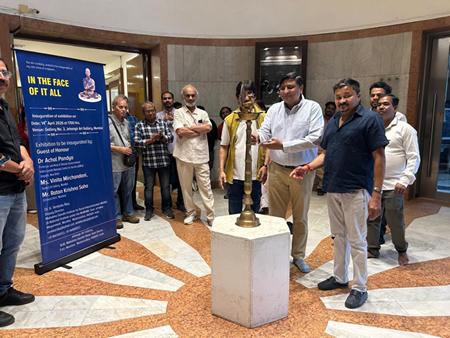
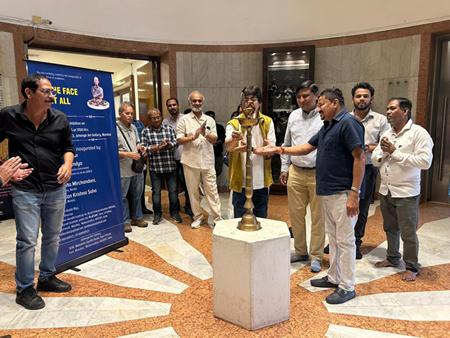
This show was inaugurated on 8th October 2025 by Honourable Guest – Prakash Bal Joshi(Veteran Visual Artist), in the presence of Dr. Sanjay Bhide ( Founder, Convenor and secretary TACCI), Mukesh Parpiani(Legendary Photojournalist)

Photography has always been a way of holding a mirror to the world. But in these images, the mirror is tilted—revealing not only what is seen, but also what is suggested, what lies between perception and imagination. These photographs by Sateesh Dingankar listen to the quiet gestures of the world— a twig casting shadows that dance, a crack turning into an exclamation, a tree trunk whispering a human form.

Light bends, metal shimmers, rust deepens into memory. Ants march, a snail hesitates, nature leans against the man-made, and even what is discarded smiles back. In this exhibition, photography is not just documentation, but meditation. It is a practice of finding poetry in surfaces, gestures, and fleeting light—reminding us that the extraordinary is often hidden in plain sight.

—-Prakash Bal Joshi- Eminent Artist


WANDERING EYE An Exhibition Of Photographs By Sateesh Dingankar In Jehangir Art Gallery

WANDERING EYE An Exhibition Of Photographs By Sateesh Dingankar In Jehangir Art Gallery...

8th to 14th October 2025

“Wandering Eye”

An Exhibition of Photographs by Sateesh Dingankar

This show was inaugurated on 8th October 2025 by Honourable Guest – Prakash Bal Joshi(Veteran Visual Artist), in the presence of Dr. Sanjay Bhide ( Founder, Convenor and secretary TACCI), Mukesh Parpiani(Legendary Photojournalist)

Photography has always been a way of holding a mirror to the world. But in these images, the mirror is tilted—revealing not only what is seen, but also what is suggested, what lies between perception and imagination. These photographs by Sateesh Dingankar listen to the quiet gestures of the world— a twig casting shadows that dance, a crack turning into an exclamation, a tree trunk whispering a human form.

Light bends, metal shimmers, rust deepens into memory. Ants march, a snail hesitates, nature leans against the man-made, and even what is discarded smiles back. In this exhibition, photography is not just documentation, but meditation. It is a practice of finding poetry in surfaces, gestures, and fleeting light—reminding us that the extraordinary is often hidden in plain sight.

—-Prakash Bal Joshi- Eminent Artist

WANDERING EYE An Exhibition Of Photographs By Sateesh Dingankar In Jehangir Art Gallery