nav-left cat-right
cat-right

Poster launch of Hindi short film DASTAK featuring Tushar Kumar – Saru Maini...

Poster of Hindi short film “Dastak” starring Tushar Kumar, Saru Maini and Sunaina was launched with much fanfare in Mumbai. Dastak was celebrated by cutting a cake on the occasion. Produced by Kumar Charitable Trust (Ashok Shah) and Shruti, the film is directed by Rajiv S. Ruia, written by Priyanka Mehta, music by Rajesh Sharma, sung by Tushar Verma.

Actor Tushar Kumar, who has a similar face to Aditya Roy Kapur, lives in Melbourne, Australia, but acting is not his hobby but his passion. He told that in the era of OTT and short films, in such a situation Dastak is a great suspense thriller short film directed by Rajiv S Ruia. It was a memorable experience working with co-actress Saru Maini, she is very professional and supportive.

Shooting in the scorching heat in Surat was quite challenging for Tushar Kumar but he never compromised on his work. Actress Saru Maini told that Tushar Kumar has a great passion for work. He comes to India from Melbourne for 8-10 days and does a lot of work here.

This short film of 20 minutes also has a theme song which has been shot beautifully.

Apart from Dastak, Saru Maini is very excited about her another upcoming project 72 Hoorein which is going to release next month.

Poster launch of Hindi short film DASTAK featuring Tushar Kumar – Saru Maini

लेखक निर्देशक हरिपाल रावत की हिंदी फिल्म “काश सोच लेती एक बार” की अनोखी है कहानी ; रामा मेहरा...

बेटी और मां एक ही व्यक्ति से प्रेम करने लगें तो सोचे कि क्या सिचुएशन हो सकती है। लेखक निर्देशक हरिपाल रावत की अपकमिंग हिंदी फिल्म “काश सोच लेती एक बार” की कहानी इसी थीम पर बेस्ड है। आर एमजे मीडिया वेंचर प्राइवेट लिमिटेड प्रेजेंट्स इन एसोसिएशन विथ रामा मेहरा प्रोडक्शंस फिल्म “काश सोच लेती एक बार” की प्रेस कॉन्फ्रेंस मुम्बई के इम्पा थिएटर में रखी गई जहां लेखक निर्देशक हरिपाल रावत, रामा मेहरा सहित फ़िल्म से जुड़ी टीम मौजूद थी। फ़िल्म के पोस्टर भी लॉन्च किए गए साथ ही स्पेशल स्क्रीनिंग भी रखी गई। मौजूद लोगों ने फ़िल्म को काफी सराहा।

फ़िल्म के प्रोड्यूसर आर एमजे मीडिया वेंचर प्राइवेट लिमिटेड हैं जबकि लेखक निर्देशक हरिपाल रावत ने फ़िल्म के गाने भी लिखे हैं और उन्होंने ही फ़िल्म में मुख्य भूमिका निभाई है। फ़िल्म के संगीतकार हरीश श्रीवास, डीओपी चितरंजन धाल हैं। हरिपाल रावत के अलावा फिल्म में रामा मेहरा, महिमा गुप्ता, वर्षा कापेकर, पृथ्वी, रज़ा मुराद, मोहन जोशी, मुश्ताक खान, शिवा, शशि शर्मा इत्यादि ने अभिनय किया है।

रामा मेहरा ने बताया कि हरिपाल रावत एक बेहतरीन लेखक हैं, उनकी कई किताबें प्रकाशित हो चुकी हैं और अब इस फ़िल्म के माध्यम से वह बतौर ऎक्टर निर्देशक भी अपना सफर शुरू कर रहे हैं। उनमें आत्मविश्वास भरा हुआ है और उन्होंने पूरी शिद्दत से फ़िल्म बनाई है। चूंकि उन्होंने कहानी भी लिखी है इसलिए उन्हें हर सीन हर डायलॉग याद था और शूटिंग पर उन्होंने बखूबी परफॉर्म किया है।

हरिपाल रावत ने कहा कि मेरा इरादा ऎक्टर या निर्देशक बनने का नहीं था लेकिन जब मैंने देखा कि आज लोग किताबें उस संख्या में नहीं पढ़ते जितने ज्यादा लोग फिल्मे देखते हैं इसलिए अपने विचार को अवाम के सामने पेश करने के लिए मैंने यह फ़िल्म बनाई है। हम लगातार फिल्मे बनाते रहेंगे इसके बाद दो और फ़िल्म भी आ रही है। चूंकि रामा मेहरा की फिल्मों के नाम  के से शुरू होता है इसलिए इसका टाइटल काश सोच लेती एक बार रखा। ऐसी कहानी आप लोगों ने शायद ही फिल्मों में देखी होगी जहां मां बेटी एक ही व्यक्ति से मोहब्बत करने लगती हैं। फ़िल्म का म्युज़िक भी इसका प्लस पॉइंट है जिसके गाने मैंने ही लिखे हैं। फ़िल्म जून 2023 में रिलीज होने जा रही है।

लेखक निर्देशक हरिपाल रावत की हिंदी फिल्म “काश सोच लेती एक बार” की अनोखी है कहानी ; रामा मेहरा

Basu Chatterjee – Remembering Bollywood’s God of Small Things...

———-Sundeep Bhutoria

By the end of the 1960s, Hindi cinema was poised for a change. The decade had largely been about escapist cinema, and though some of these had great songs, there was little that was creative and path-breaking by way of content. The odd exceptions – Bandini, Sahib Bibi Aur Ghulam, Anupama and Teesri Kasam – only proved the rule about a decade that replaced the artistic aspirations of the 1950s with what has in effect come to define ‘Bollywood song-and-dance’ cinema.

The advent of the Film and Television Institute of India (FTII) in 1962 played an important part in this change, with its first batches beginning to enter the industry, bringing in a change in aesthetics. The year 1969 was to be a watershed in the history of Hindi cinema, with three films that proved instrumental in ushering in a new language, heralding the New Wave in Hindi cinema: Mrinal Sen’s Bhuvan Shome, Mani Kaul’s Uski Roti and Basu Chatterjee’s Sara Akash (all three were shot by K.K. Mahajan, who had graduated from the FTII in 1966, and who became synonymous with the New Wave and with the cinema of Basu Chatterjee).

Of these three film-makers, Mrinal Sen remained rooted largely to Bengali films and Mani Kaul carved a space for a personal cinema free of commercial considerations. It was Basu Chatterjee who, in conjunction with the films of Hrishikesh Mukherjee and Gulzar, provided an alternative to the big-budget extravaganza of mainstream films of the era (the Manmohan Desais and Prakash Mehras) and the spare aesthetics of arthouse cinema (driven by Shyam Benegal).

The importance of Basu Chatterjee lies in the kind of cinema he popularised when juxtaposed against the cinema that ruled the box office at the time. The 1970s was the decade of the big blockbuster – Yaadon Ki Baaraat, Deewaar, Sholay, Amar Akbar Anthony. Yash Chopra and Ramesh Sippy, Nasir Hussain and Shakti Samanta were the dream merchants. Amitabh Bachchan and Dharmendra, Rishi Kapoor and Rajesh Khanna were the role models for the filmy hero, while Zeenat Aman and Hema Malini set a million young hearts aflutter. The aesthetic of Hindi cinema was larger-than-life.

They were not heroes and heroines, but the man and woman next door

Basu Chatterjee provided an alternative. His debut, Sara Akash, belonged firmly to the New Wave school of spare film-making. He however jettisoned this soon, opting for a middle road between this and the big-budget extravaganza. In doing so he made ‘small’ beautiful and commercially viable. With Rajnigandha (1974), he revolutionised Hindi cinema, casting rank newcomers in a literary classic by Mannu Bhandari. The film, unlike any other film of the time (a runtime of approximately two hours, no lip-synched songs, no fights, no flashy clothes and make-up for its actors who looked nothing like Greek gods) broke all records at the box office. He had already shown a penchant for a different approach to the cinema of the city in Piya Ka Ghar (1971), dealing with a couple finding their way to love and domesticity in the confined spaces of a one-room tenement in Mumbai shared by the extended family. While the latter starred Jaya Bhaduri (in one of her early roles) and Anil Dhawan (fresh from the FTII), Rajnigandha made stars of the unlikely duo of Amol Palekar and Vidya Sinha.

Over the next few films, Basu Chatterjee made his school of cinema an audience favourite. Chhoti Si Baat and Chitchor, both 1976, starred Amol Palekar, who soon came to be termed ‘the Amitabh Bachchan of middle-of-the-road cinema’. In Vidya Sinha, the director gave Hindi cinema the very antithesis of the ’70s heroine. His characters epitomised the Everyman. They were not heroes and heroines, but the man and woman next door. The men were not macho style icons. They were often gentle, hesitant and even lacking in ambition. The women were down to earth and real, not coy and simpering. And their world consisted of humble middle-class drawing rooms, local bus stops and trains, and office corners. Even when he cast superstars like Amitabh Bachchan (Manzil, inspired by Mrinal Sen’s Akash Kusum) and Dharmendra (Dillagi, with Hema Malini), the stars willingly shed their starry mannerisms to play everyday characters.

His spotlight was on literary classics, communities and women

No one brought alive particular communities as lovingly as he did in his films like Khatta Meetha (the Parsis) and Baaton Baaton Mein (the Christians in Mumbai). And few film-makers of the time were as adept at adapting literary classics as he was – Sara Akash (from a novel by Rajendra Yadav), Piya Ka Ghar (Vasant Kale, or Va Pu), Rajnigandha (based on a short story by Mannu Bhandari), Ratnadeep (Prabhat Mukhopadhyay), Swami and Apne Paraye (based on novels by Saratchandra Chattopadhyay) – giving his cinema a unique literary sensibility.

One of the most revolutionary aspects of his cinema lay in the woman his films portrayed. Right from Malti in Piya Ka Ghar, they were independent women with a mind of their own. They were determined, focused and unwilling to bow down to convention just because society demanded it. Vidya Sinha’s Deepa in Rajnigandha is revolutionary in the way she is shown as unable to make up her mind about the two men she is dating. Zarina Wahab’s Geeta in Chitchor decides to follow her heart in the face of family opposition. In Swami, the woman reads Thomas Hardy and is torn between the man she thinks is her intellectual equal and her ‘simple’ husband. These women challenged the existing tropes on the portrayal of women in Hindi cinema.

Wah, what songs! ‘Yeh jeevan hai’ to ‘Kai baar yunhi dekha hai’ to ‘Rimjhim gire sawan’

This ability to carve out a different cinema was visible in the songs in his films as well. From ‘Yeh jeevan hai’ in Piya Ka Ghar to ‘Rajnigandha phool tumhare’ in Rajnigandha (‘Kai baar yunhi dekha hai’ from the same film won a National Award) to the evergreen songs of Chitchor to ‘Rimjhim gire sawan’ (arguably the finest rain song in Hindi cinema) in Manzil, the cinema of Basu Chatterjee provided Hindi cinema with some of its most loved and enduring classics.

The dream of 1969 was to prove short-lived. By the end of the 1970s, the cinema of the Basu Chatterjee-Hrishikesh Mukherjee-Gulzar School was shutting shop. Driven by a changing demographic, the onslaught of video piracy, some indifferent films by the film-makers themselves, and the advent of TV as a popular medium, kitschy commercial films were making a comeback in a big way and the next decade would witness a new low for Hindi films.

Basu Chatterjee, of course, led the first wave of top-notch and popular content in television with serials like RajaniByomkesh BakshiDarpan and Kakaji Kahin proving to be trailblazers. His legacy lives on in the cinema of every filmmaker who explores the life and world of the Everyman.

Basu Chatterjee – Remembering Bollywood’s God of Small Things

रोमानिया के अनुभव के साथ मारवाह स्टूडियो में विश्व पर्यावरण दिवस मनाया गया...

विश्व पर्यावरण दिवस की काफी अच्छी शुरुआत हुई जब इंडो-रोमानिया फिल्म एंड कल्चरल फोरम ने इंटरनेशनल चैंबर ऑफ मीडिया एंड एंटरटेनमेंट इंडस्ट्री और रोमानिया के दूतावास के सहयोग से विश्व पर्यावरण दिवस मारवाह स्टूडियो में एक बेहतरीन डॉक्यूमेंट्री फ़िल्म “अंटेम्ड रोमानिया” की विशेष स्क्रीनिंग के साथ मनाया।

दर्शकों को मंत्रमुग्ध करने वाली इस फिल्म का उद्घाटन एच.ई. डेनियल टेन, भारत में रोमानिया के राजदूत, और मारवाह स्टूडियो के अध्यक्ष संदीप मारवाह, और इनके अलावा कुछ विशिष्ट अतिथियों एच.ई. जेवियर पॉल्निच भारत में पेरू के राजदूत, एच.ई. तियोदोरो माल्दोनोडो भारत में इक्वाडर के राजदूत और लेफ्टिनेंट जनरल अनिल मलिक (सेवानिवृत्त) द्वारा किया गया।

“अंटेम्ड रोमानिया” एक असाधारण सिनेमाई रचना है जो रोमानिया की लुभावनी सुंदरता और विविध वन्य जीवन को प्रदर्शित करती है। फिल्म मेकर का समर्पण सराहनीय है, क्योंकि 400 घंटे से अधिक के फुटेज को 90 मिनट की एक शानदार डॉक्यूमेंट्री में तैयार किया गया है, जो रोमानिया के हलचल भरे शहरों से परे छिपी अदम्य दुनिया में एक झलक पेश करता है। राजसी पहाड़ों से लेकर प्राचीन जंगलों तक, यह फिल्म दर्शकों को उन स्थानों में ले जाती है जहां प्रतिष्ठित जीव पनपते हैं,” संदीप मारवाह ने गर्व के साथ कहा।

स्क्रीनिंग के बाद, पर्यावरण के मुद्दों पर एक विचारोत्तेजक चर्चा आयोजित की गई, जिसमें प्रमुख पर्यावरणविद् अजीत कुमार और रंजू मिन्हास शामिल थे। उनकी बातों ने हमारे पर्यावरण की सुरक्षा के महत्वपूर्ण पहलुओं पर प्रकाश डाला।

“अंटेम्ड रोमानिया” का प्रभाव केवल दर्शकों तक ही सीमित नहीं था; इसने उपस्थित फिल्म निर्माताओं पर भी एक स्थायी छाप छोड़ी। इसकी उत्कृष्टता की मान्यता में, एशियन एकेडमी ऑफ फिल्म एंड टेलीविजन के इंटरनेशनल फिल्म एंड टेलीविजन क्लब के द्वारा “अंटेम्ड रोमानिया” को प्रतिष्ठित पुरस्कार प्रदान करते हुए खुशी हो रही है।” डॉ. संदीप मारवाह ने यह घोषित किया।

यह विश्व पर्यावरण दिवस कार्यक्रम हमारे ग्रह के प्राकृतिक आश्चर्यों के बारे में जागरूकता बढ़ाने और उनकी रक्षा करने की तत्काल आवश्यकता में सिनेमा की ताकत को दर्शाता है। अंटेम्ड रोमानिया” मनुष्य और प्रकृति के बीच सामंजस्यपूर्ण सह-अस्तित्व के एक चमकदार उदाहरण के रूप में खड़ा है, जो हमें भविष्य की पीढ़ियों के लिए पृथ्वी को संरक्षित करने की हमारी जिम्मेदारी की याद दिलाता है। अब हर ओर हरियाली है!

रोमानिया के अनुभव के साथ मारवाह स्टूडियो में विश्व पर्यावरण दिवस मनाया गया

Rohaan Arjun Is Known For His Unforgettable Superhits Remix Song Dil Naiyo Lagda...

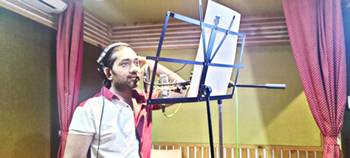
An eminent figure in the Bollywood industry since 1996 (Born on 16th September 1980), has been known for his rich tonal quality and unique sense for music arrangement, and now as a social media sensation too! Having established himself as a singer, composer and arranger, he has left no reason to limit himself only to Hindi. He has projects in his hit lists which demanded adapting to Bengali, Assamese, Bhojpuri, Punjabi and various Indian Languages. A heartthrob amongst the youngsters, his live shows are real crowd energizers.

Rohaan Arjun is known for his unforgettable superhits which include the iconic arrangement of the song ”’Mash Allah”’ from the Movie “Ek Tha Tiger” under the Music Director duo Sajid–Wajid. His remix song ”Dil Naiyo Lagda” from the film Tezz is a blockbuster through Ishtar Music (perviously known as Venus Records). He exactly knew how to pull the young crowd and that is how he arranged the English version of “Dhoom Machale” sung by Tata Young. In the 90’s parties were incomplete without his remixes from the bestselling albums “Baby H” and “DJ Hot Mix”. Time and again he proved himself to be ahead of the generation; and without wasting a day, he introduced remixes in the Bengali Film Industry (Tollywood), in form of the highest selling albums “RD Club Mix” and “Kalyani Black Label Strong Superhits” (both by Saregama Music). He is known for his Background Scores for the films “Life in Park Street” directed by Rituparno Ghosh, “Bhorer Pakhi” directed by Tapan Dutta, “Kolkata – The Metro Life” directed by Rohin Banerjee out of the many hits. He became a fame overnight in the Bhojpuri Music Industry, for his creation “Rajai Bina Ratia Kaise Kati” from the album Kehu Lutera Kehu Chor (released by Saregama Music).

Rohaan Arjun has been to Julien Day School followed by Graduating in Physics Honours, from Ashutosh College, Kolkata. Apart from being a professional vocalist, he finds immense interest in flying airplanes and helicopters. A foodie from heart, he enjoys Chinese and Indian cuisines. He loves indulging in casual chats over a warm cup of coffee.

Music has been in his blood, since his father was a passionate singer and his mother was trained in classical vocals. Having started to feel the passion for music already, he completed 5th year Diploma in Tabla from Chandigarh Prachin Kala Kendra. Thereafter, he chased his interest by taking Sitar lessons from Pt. Deepak Chowdhury, disciple of The Sitar Maestro Pt. Ravi Shankar. By now he had developed good understanding in music and tried hands at light music. There was no stopping him, now that he had grabbed the opportunity to do the Background Scores for the eminent reciter Bratati Bandyopadhyay. Simultaneously, he started trying hands at live shows as a vocalist and also began his journey as creator of unforgettable remixes.

News about his upcoming projects is doing rounds in the industry. “Yaad Piya Ki Aane Lagi”, a duet with Neha Kakkar is coming soon, belonging to the Music Label T-Series.“Gabru”, a song of Yo Yo Honey Singh, recreated by Tanishk Bagchi, sung by Rohaan Arjun, belonging to Music Label T-Series. Upcoming playbacks under the patronage of music composers like Vishal & Sheykhar, Pritam, Himesh Reshammiya to name a few, will be published under the banners of Yash Raj Films, Saregama Music, Sony Music India, T-Series. Remix projects, “Ek Hasina Thi” to be released by Saregama Music and a new Punjabi composition “Gori Nakhra Tera” to be released under the banner of T-Series.


Rohaan Arjun – Indian Playback Singer An Eminent Figure In The Bollywood Industry Since 1996

Asian Academy Of Film And Television Holds Record-Breaking 116th Convocation...

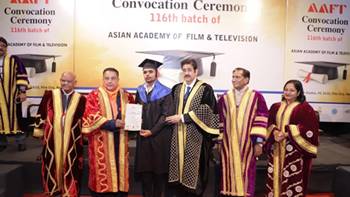
Noida, June 6, 2023 – The Asian Academy of Film and Television (AAFT) proudly celebrated its historic 116th Convocation, setting a new benchmark in the world of creative education. This remarkable feat marks a significant milestone as no other creative institute has ever conducted a 115th Convocation or valedictory function before.

During the momentous event, AAFT presented prestigious diplomas to the talented students who excelled in their respective disciplines. The institution’s unwavering commitment to providing the best education possible within limited fees has garnered immense satisfaction and happiness among the students.

Addressing the convocation, Sandeep Marwah, a distinguished personality and visionary, urged the graduating students to prove their capacity and capability in the industry. He emphasized the importance of the moral values imparted during their education, which hold greater significance than the syllabus itself. Marwah stressed that success in the industry awaits those who exhibit sincerity, dedication, and integrity in their work.

The occasion was graced by esteemed personalities, including Advocate Pawan Duggle from the Supreme Court, renowned Actor Producer/Director Raja Bundela, former Principal Secretary of Madhya Pradesh Prof. H.R. Garg, and architects Manish Gupta and Rashmi Gupta. These distinguished individuals also inaugurated the EDIC-Entrepreneur Development and Incubation Centre, a remarkable initiative that will empower AAFT students with entrepreneurial skills and opportunities.

AAFT continues to be at the forefront of creative education, equipping students with the knowledge, skills, and ethical values necessary for a successful career in the industry. The 116th Convocation stands as a testament to AAFT’s commitment to excellence and innovation in the field of film and television education.

Asian Academy Of Film And Television Holds Record-Breaking 116th Convocation